Smooth, stable wall repairs
Drywall repair for holes, dents, and damaged areas
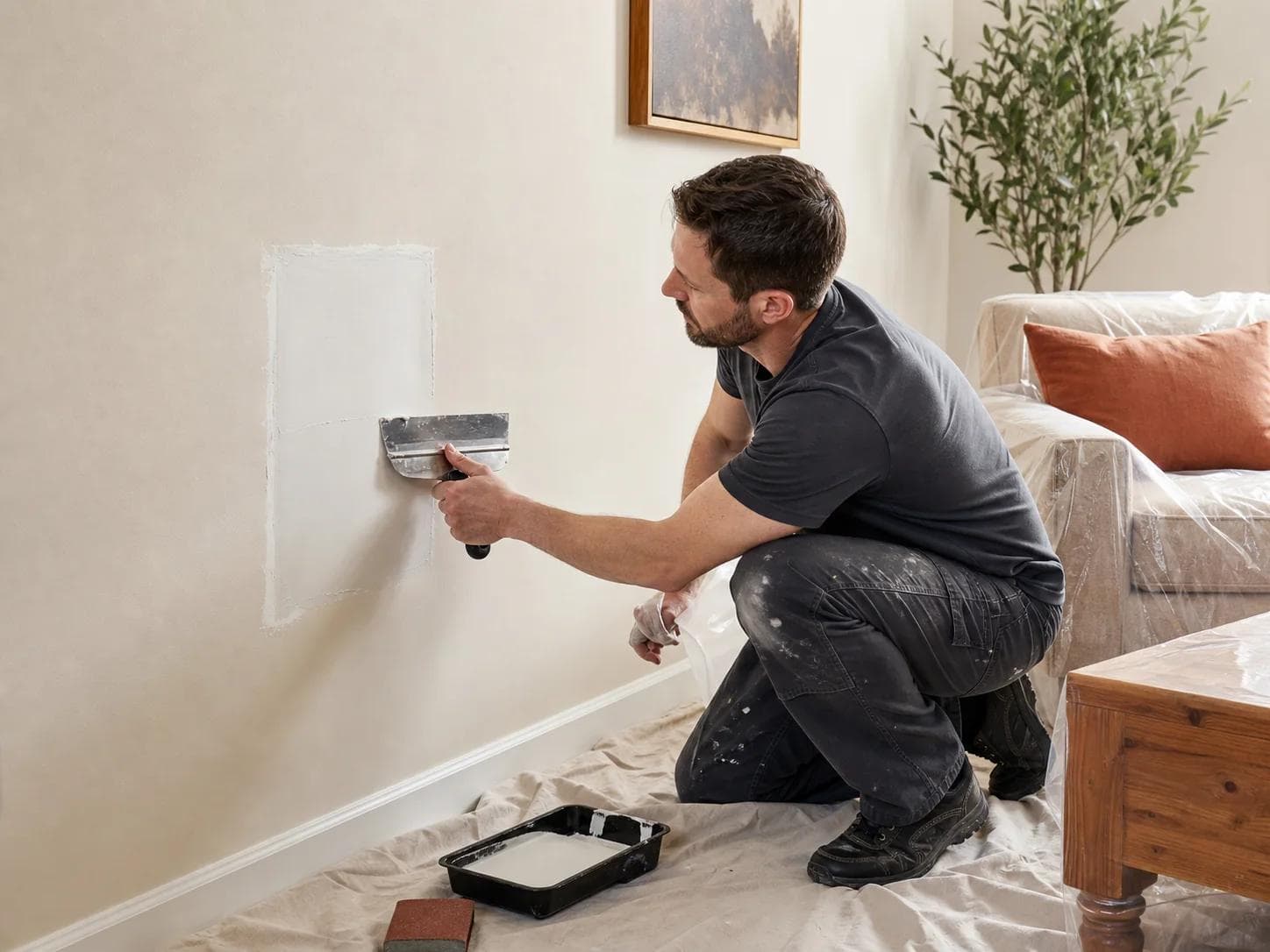
From failed anchors to an accidental hole, limited drywall damage can often be patched without replacing a full wall. The repair must be stable, properly feathered, and ready for the intended finish.
What’s included
Drywall and Sheetrock repairs
- Small and medium wall-hole patches
- Anchor, nail, and hardware damage
- Dents, gouges, and failed prior patches
- Limited ceiling drywall repair
- Paint-ready sanding and priming preparation
Know what to look for
Look beyond the visible hole when
- The wall feels soft or damp
- Cracks continue growing or return after repair
- The damage follows a leak or plumbing issue
- The area includes tile, extensive texture, or structural movement
How it works
Clear scope. Precise work. No guesswork.
- 01
Inspect the damage, surrounding board, and likely cause.
- 02
Cut back unstable material and add support when needed.
- 03
Patch, tape, fill, and feather in appropriate coats.
- 04
Sand and prepare the area for primer and paint.
Keep planning
More solutions for the work your home needs
How long does a drywall patch take?
Drying time between coats matters. Some repairs require more than one stage or visit before they are ready for paint.
Can you repair ceiling drywall?
Limited ceiling repairs may be possible after any leak is fixed and the material is fully dry.
Does drywall repair include painting?
Paint-ready preparation and painting can be scoped together, but they are distinct steps and should both be included in the request.
Can you match textured walls?
Many common textures can be approximated, but lighting and the existing application affect how closely a patch blends.